
The Development Corporation
What becomes possible when the Yakutat Tlingit Tribe charters its own economic engine — a tribally owned development corporation and an energy corporation — and turns federal law that already favors tribes into jobs, revenue, and sovereignty for our people.
This is the same path Alaska Native corporations have run for decades. YTT as a tribe has the same statutory access. We have simply never built the vehicle. This shows how.
Two entities, one engine
The Tribe charters a wholly tribally owned development corporation — a federally chartered Section 17 corporation or a tribally owned holding company. Think of it as the umbrella: a business arm, owned by the Tribe, legally separate from the government so contracts and liability never touch the council or the peace mandate.
Inside that umbrella sits a Tribal Energy Development Organization (TEDO) — a specific status in federal law (25 U.S.C. § 3501–3504). Once certified by the Interior Department, a certified TEDO can enter energy leases, rights-of-way, and business agreements on trust land without seeking Secretarial approval for each deal. That is a direct expansion of sovereignty. Certification takes a tribal resolution and an application; Interior must decide within 90 days. The Red Lake Band was the first certified, in 2022.
The Development Corporation
The umbrella. Pursues federal contracting, holds subsidiaries, returns net revenue to the peace mandate.
The Energy Corporation (TEDO)
A certified module inside the umbrella — energy deals on trust land without per-transaction federal sign-off.
Advantages no ordinary business has
A business that is majority-owned by a federally recognized tribe gets contracting access that ordinary small businesses can only dream of. These four authorities stack together.
SBA 8(a) — the big one
A business 51%+ owned by a federally recognized tribe can receive sole-source federal contracts of unlimited size — no competition required, and awards are exempt from protest. A tribe can own multiple 8(a) subsidiaries, each with its own nine-year program term. This is the machinery Alaska Native corporations used to build federal-services giants. YTT as a tribe has the same statutory access — it has simply never built the vehicle.
Buy Indian Act
The BIA and IHS must prioritize set-asides for Indian Economic Enterprises — 51%+ Indian-owned and Indian-controlled. Since the 2022 final rules, these enterprises may compete for all construction contracts, and roughly $300M a year flows through Buy Indian set-asides. YTT already interfaces with both agencies through 638 contracting; a subsidiary rides the same relationships.
HUBZone
Lands within ANCSA areas and Indian Country qualify as HUBZones. A Yakutat-based subsidiary earns a 10% price-evaluation preference in full-and-open competition plus access to HUBZone set-asides — and it stacks on top of 8(a).
Self-determination & self-governance
Under P.L. 93-638, the Tribe takes over federal program dollars — BIA, IHS, and expanding pilot authorities at other agencies — and runs them itself, with contract support costs paid. The same sovereignty principle that powers the development corporation.
Six contract lanes we can actually win
These are not hypotheticals. Each one builds on work the Tribe already does, or on assets Yakutat already holds — numbered so leaders and members can weigh and pursue them one by one.
Environmental remediation
The Tribe already runs NALEMP cooperative agreements cleaning WWII-era military contamination. An 8(a) environmental subsidiary converts that experience into Army Corps Formerly Used Defense Sites (FUDS) remediation contracts across Alaska — hundreds of sites, steady funding. The classic playbook: turn a grant program you know into a line of business.
Energy
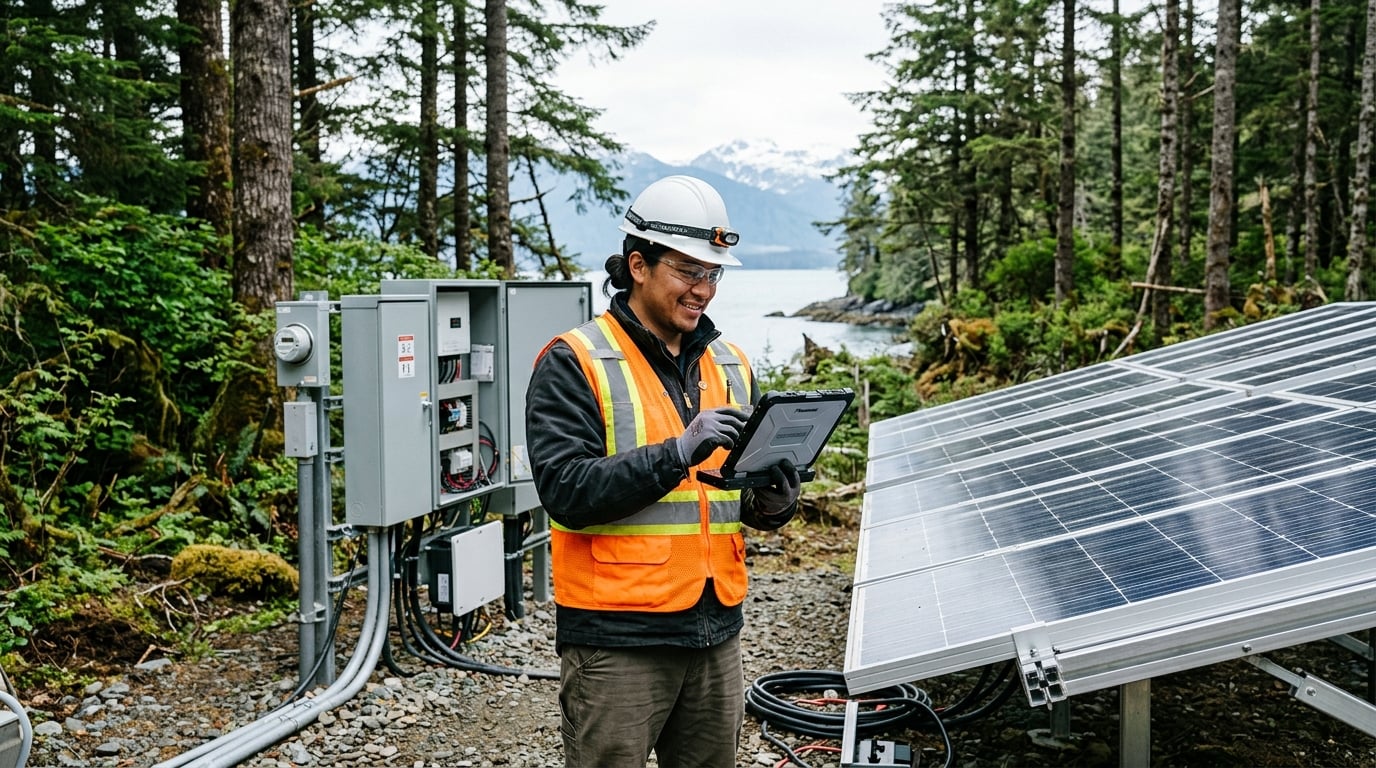
DOE’s Office of Indian Energy funds tribal energy projects and opens National Laboratory technical resources to certified TEDOs. For Yakutat: micro-hydro, heat pumps, biomass from forest remediation, and resilience microgrids — plus authority to do energy deals on future trust land without per-transaction BIA sign-off.
Fisheries & ocean science
NOAA and USFWS regularly award cooperative agreements for fisheries research, monitoring, and habitat restoration — YTT received a USFWS cooperative agreement in 2024. The Situk weir, sockeye and steelhead monitoring, and mariculture development are all fundable as recurring federal work.
Forest & land stewardship
USDA Forest Service stewardship contracts and Good Neighbor / co-stewardship agreements on the Tongass — including restoration of previously logged corporation lands — align federal money with healing the Yak Timber damage.
Federal services
IT services, cybersecurity, logistics, facilities management, and administrative support are where tribal 8(a)s earn most of their revenue — work performed anywhere, including by remote tribal-member employees. Train members in Colville, Seattle, or Anchorage; employ them on federal contracts through the Tribe’s own companies; revenue funds the peace mandate.
Infrastructure at home
FAA and DOT work at Yakutat’s airport, Denali Commission and EPA infrastructure projects, NTIA tribal broadband (construction and then ISP operations), and BIA road maintenance — much of it reachable through Buy Indian or 8(a) set-asides, keeping construction dollars in tribal hands.
Peer tribes have already run this
Alaska Native corporations built federal-services powerhouses from the same statutory access YTT holds. Chenega grew from $13M in revenue in 2000 to $1.1B by 2009. Afognak / Alutiiq runs roughly 5,000 employees across nearly every state. Dozens of smaller village entities have run the same play at smaller scale.
Chenega revenue growth, 2000–2009
Afognak / Alutiiq employees nationwide
flows through Buy Indian set-asides each year
A realistic trajectory
First Buy Indian and NALEMP-adjacent awards — six figures to low millions — building on remediation and fisheries work the Tribe already does.
First 8(a) sole-source federal-services work, employing trained tribal members at home and across the diaspora.
Eight-figure annual revenue is a demonstrated, repeatable target — with net revenues funding the peace and wellbeing of members wherever they live.
Told honestly
The Alaska Native record carries warnings as well as proof. Government auditors have flagged oversight gaps in the largest 8(a) contracts, pass-through abuse has produced kickback settlements, and reporting has documented how unevenly benefits reach village members. We name this because a plan built for our people must be built to avoid those failures — not repeat them.
The charter should hard-wire member benefit — dividends to the peace mandate, member hiring preferences, and full transparency to the General Assembly.
It should require real performance — self-performed work, not fronting for outside firms.
8(a) is a nine-year program per subsidiary with genuine compliance overhead. The Tribe needs one experienced business-development and compliance hire or partner before the first award, not after.
A Section 17 charter or LLC formation, plus a council resolution, must come before any SBA application — and approval typically takes months.
“Resolved: the Yakutat Tlingit Tribe charters a wholly tribally owned development corporation to pursue federal contracting under the 8(a), Buy Indian, and HUBZone authorities, seeks certification of a Tribal Energy Development Organization under 25 C.F.R. Part 224, and directs that net revenues fund the peace and wellbeing of tribal members wherever they reside.”
Gunalchéesh. What ANCSA corporations built for shareholders, the Tribe can build for members — wherever they live.