A Path Home
This is our history — the beauty and the hard truths — and a clear, numbered plan for what comes next. Ten real economic and social initiatives to reclaim our Seven Sovereign Bodies and Twelve Resource Realms, so that staying in Yakutat, or coming home, becomes a real choice.
For every member, family, house, and clan — wherever we live. Haa Shagoon belongs to all of us.
We are the People of Yaakwdáat — the farthest-north community of Southeast Alaska, where the canoes rest on the Gulf of Alaska.
Our people descend from three streams — Tlingit who migrated up from the southeastern panhandle, Athabascans who came down the Alsek River, and Copper River peoples from the northwest — woven into two moieties and five founding clans: the L’uknax.ádi and K’ineix̱ Kwáan / Kwaashk’i Kwáan of the Raven moiety, and the Teik̲weidí, Shangukeidí, and Galyáx̱ Kaagwaantaan of the Eagle moiety, later joined by others.
Our citizenship flows from the 1953 Five Chiefs base roll and lineal descent — from who our people are, not where we sleep. That single truth is the foundation of everything proposed on this page.
From Time Immemorial to Today
A history of resilience — resistance, suppression, revival, and the structural split between our government and our corporations.
Yaakwdáat — “the place where canoes rest.” Three streams of people — Tlingit from the panhandle, Athabascans down the Alsek, and Copper River peoples — become two moieties and five founding clans across a 9,460-square-mile territory.
Tlingit forces destroy the Russian post at Yakutat — part of sustained resistance to colonization.
The Stimson cannery, sawmill, and railroad reshape the village into a wage-labor economy — and a dependency that lasted nearly 70 years.
The territorial governor outlaws Native song, dance, and cultural practice — an era of active suppression.
Elders form the Mount Saint Elias Dancers, defying the ban and igniting the modern language and culture revival.
The Five Chiefs Council — one leader per founding clan — prepares clan membership lists attached to a Covenant Not to Sue. Those lists remain the Tribe’s base roll to this day.
ANCSA extinguishes aboriginal land claims. Sealaska becomes the regional corporation; Yak-Tat Kwaan, Inc. the village corporation — holding our homeland as a state-chartered corporate asset, not tribal land.
After the Yakutat Native Association drafts a constitution under the Indian Reorganization Act, the federal government recognizes the Yakutat Tlingit Tribe — our sovereign government.
The Tribe opens Haa Yaakwdáat Lingít Yoo X’atángi Kúdi — the Lingít Language Nest — for a new generation of first-language speakers.
Two Entities, Often Confused
Understanding the difference between our corporation and our government is the key to everything that follows.
Yak-Tat Kwaan, Inc.
The ANCSA Village Corporation
A for-profit corporation created after the 1971 Alaska Native Claims Settlement Act, with roughly 500 shareholders and about 21,000–23,000 acres held under Alaska corporate law, with Sealaska as regional partner. Its constituency is fixed by shareholding — not tribal citizenship — and its land is exposed to corporate debt.
Yakutat Tlingit Tribe
The Federally Recognized Government
Our sovereign tribal government — not a corporation — recognized federally on March 24, 1993. It descends from the Yakutat Native Association and operates a Tribal Council, a Tribal Court, and departments from Cultural Heritage to Environmental to Housing. Its citizens are enrolled by lineage. The constitution now being rewritten belongs to this government.
The structural flaw: ANCSA turned our homeland into a corporate asset governed by market risk instead of tribal law. Our government can hold our values — but not, by itself, our land. Closing that gap is the heart of this plan.
What the Timber Years Taught Us
We do not look away from our hardest chapters. We learn from them.
Suppression & Dependency
The dance ban, mission schooling, and a cannery wage economy disrupted clan governance and language for generations.
Military Contamination
The WWII base left debris and contamination on customary lands — cleanup continues 80 years later through NALEMP.
The Yak Timber Crisis
Debt-financed clear-cutting near sacred Gus’eix ended in a ~$13.3M lawsuit and Chapter 11 bankruptcy in 2023.
The Tribe was on the right side of the timber fight — standing with shareholders, Tlingit & Haida, and Sealaska against the clear-cut — but had no legal authority over the corporation’s land.
Sovereign values with no jurisdiction over the land base. That is the exact gap a new constitutional architecture must close.
Strength We Already Carry
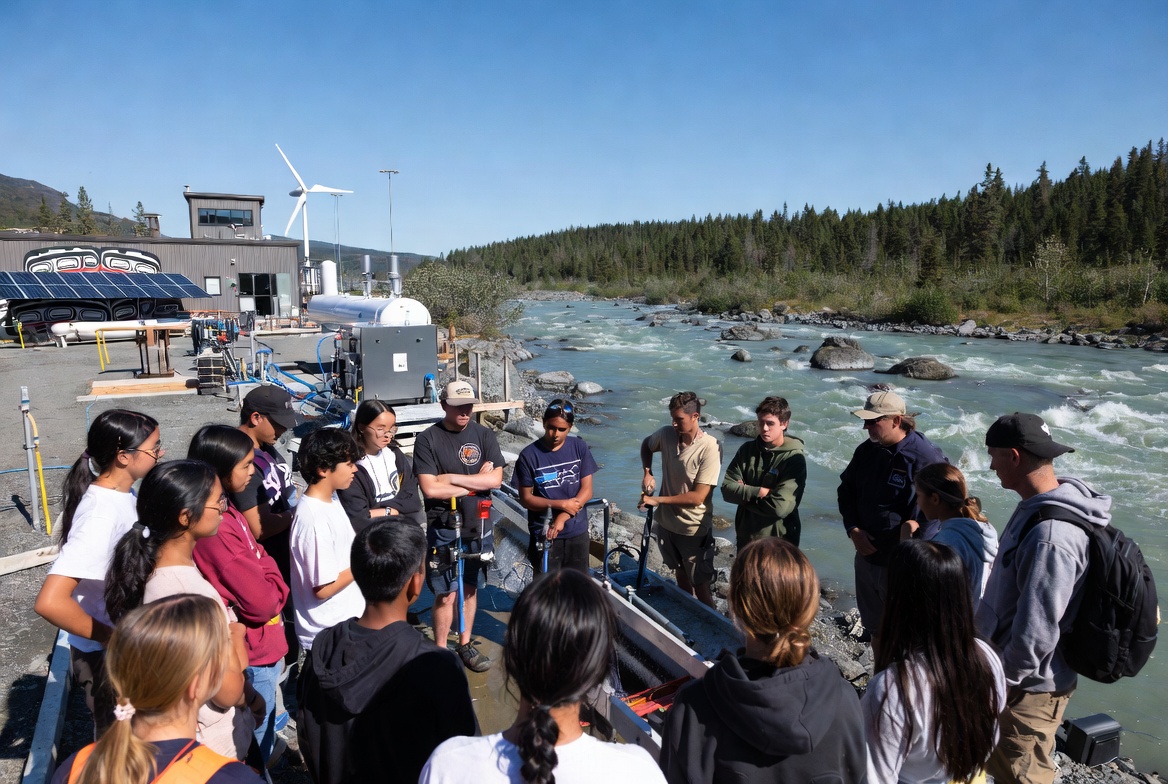
Roughly 820 enrolled members carry Yaakwdáat forward — up from 385 two decades ago. Our mission: to empower our community to thrive for generations by contributing positively to Haa Shagoon, our legacy as the People of Yaakwdáat.
Our Language Nest is raising first-language Lingít speakers again. NALEMP crews are restoring safe traditional food-gathering around the Ankau Saltchucks. NAGPRA repatriations bring our ancestors home. And we stood together to defend sacred Gus’eix.
About half of our members already live beyond Yakutat — hundreds of us with skills, capital, and careers ready to serve the Tribe. That is not a loss. It is an untapped network of strength.
Our Constitutional Convention Is Open Now
On July 8, 2026, the Tribe held its first Constitution Meetings and launched a Constitutional Convention. In the Tribe’s own words: “Times change. What worked for our Tribe when it was first formed may not still work for us today.”
And crucially: “We know many of our Tribal Members live outside of Yakutat, and your voice matters just as much.” Voting mechanics and council structure are squarely on the table. This is our invited moment — these initiatives are offered as questions and proposals for the convention to make its own.
Reclaiming Our Seven Sovereign Bodies & Twelve Resource Realms
Sovereignty is not one thing — it is many, and it must be built. The Seven Sovereign Bodies (Spiritual, Mental, Emotional, Physical, Economic, Cultural, and Political) describe a whole and healthy people. The Twelve Resource Realms (Energy, Water, Food, Health, Shelter, Waste, Education, Communication, Transportation, Manufacturing, Economics, and Governance) describe a community that provisions itself. Each initiative below is tagged with the Bodies and Realms it reclaims.
Real Economic & Social Solutions
Numbered so we can understand, act on, and support them together — as tribal members and as locals of every background who call Yakutat home.

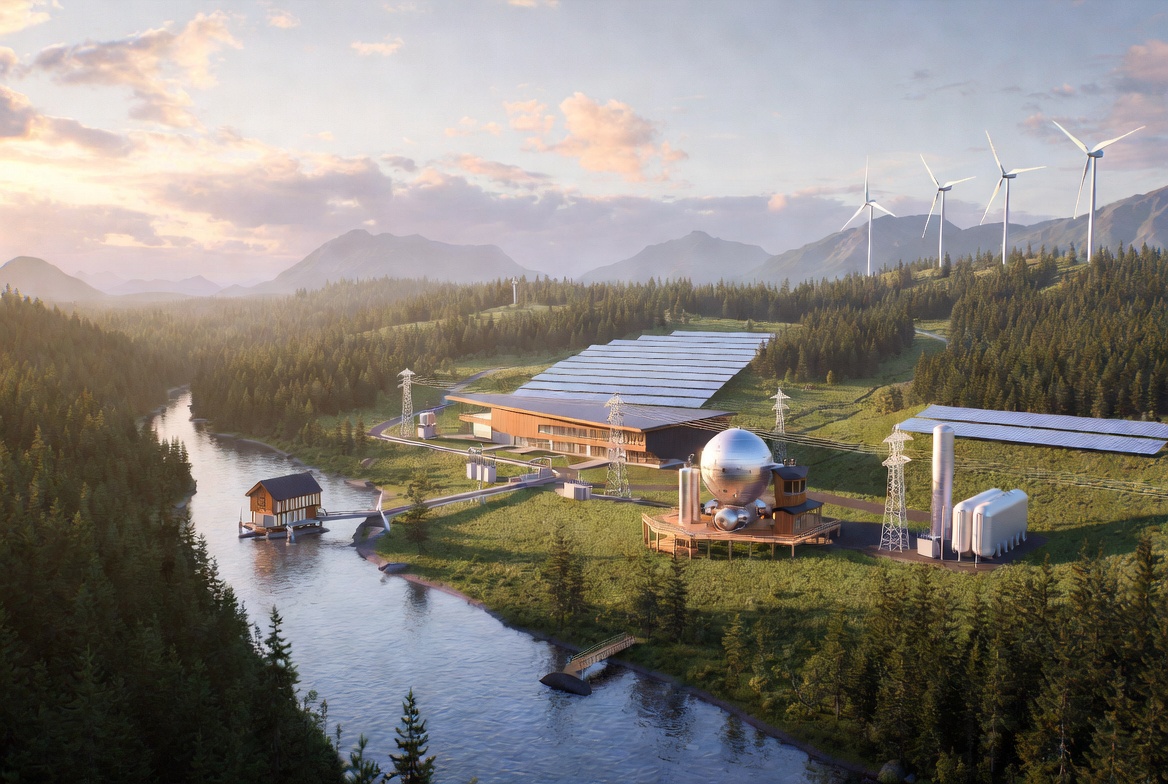
The Situk Pacific Hydrogen Alliance & Tribal Energy Development Organization
Own our power. End the diesel era. Lead Alaska.
What it is — Establish a tribally owned Tribal Energy Development Organization (TEDO) to achieve 100% energy sovereignty for Yakutat — an islanded microgrid of Situk River micro-hydro, coastal wind, solar, battery and green-hydrogen storage, and next-generation baseload — then export that proven model to the ~200 other diesel-dependent Alaska communities as a revenue engine for the Tribe.
Why it matters — Yakutat burns roughly 35,000 gallons of diesel a month and pays about $0.55/kWh — among the highest rates in the United States, near $1.8 million a year in fuel alone. Every one of those dollars leaves our community. A locally owned system keeps that wealth home, stabilizes prices, cleans our air and water, and creates skilled jobs.
The action — Pass a Tribal Council resolution forming the TEDO, appoint a 5–7 member board, and commission the grant-funded Energy Sovereignty Feasibility Study ($250k–$450k via DOE, AEA, and BIA). Federal tools — DOE Tribal Energy Financing and IRA tax credits with direct pay — are built for exactly this.
spent on diesel fuel each year — for power alone
per kWh today — among the highest rates in the U.S.
energy sovereignty target for Yakutat
other Alaska communities we can serve and lead
Universal Suffrage for Every Enrolled Member
Citizenship is lineage, not zip code.
What it is — Amend the constitution and Election Ordinance so every enrolled member 18+ may vote in all tribal elections and referenda by secure absentee or electronic ballot, no matter where they live.
Why it matters — Our citizenship comes from the 1953 Five Chiefs base roll and lineal descent — from who our people are, not where we sleep. About half of our ~820 members already live outside Yakutat. Leaving for school or work is the norm, not the exception, and those members are one of the Tribe’s greatest untapped assets.
The action — Submit universal-suffrage language as a discrete proposal to the 2026 Constitutional Convention; pair it with a revised Election Ordinance defining audited remote-ballot mechanics.
Realms: Governance · Communication
Bodies: Political · Cultural
Diaspora Council Representation
A seat at the table for those who carry Yaakwdáat with them.
What it is — Restructure the Tribal Council to include at-large seats plus guaranteed seats for members living outside the service area — or a bicameral echo of tradition: a Clan Assembly seated by clan alongside the elected Council.
Why it matters — Remote members bring capital, careers, and connections. Representation turns absence into infrastructure and honors the nested clan-and-house governance that predates the flattened 1993 structure.
The action — Propose reserved non-resident seats (or the Clan Assembly model) to the convention, with real-time remote attendance, testimony, and binding remote voting for all meetings.
Realms: Governance
Bodies: Political · Cultural · Spiritual
A Constitutional Purpose Clause Centered on Peace
Government measured by the wellbeing of every family.
What it is — Add a purpose clause: “The purpose of the government of the Yakutat Tlingit Tribe is to secure the peace, wellbeing, and continuity of each member, family, house, and clan of the Tribe, wherever they reside, and of the land and waters of Yaakwdáat.”
Why it matters — It gives the whole government a single measure of success — peace, defined as sustained wellbeing — so programs, budgets, and staff exist to serve people, not the reverse. This is a return to Tlingit tradition, where peace-making was a core function of governance.
The action — Offer the purpose clause as a stand-alone amendment; discrete items pass more easily than a full rewrite.
Realms: Governance
Bodies: Spiritual · Emotional · Political
The Regenerative Tribal Operating System (RTOS)
Peace as the unit of account.
What it is — A five-layer governance and service framework modeled on the Peace Protocols: a constitutional kernel, hybrid in-person/remote governance, member-owned wellbeing profiles, re-platformed services that reach members anywhere, and a regenerative economy engine.
Why it matters — It restores the nested individual → house → clan → council architecture in modern administrative and digital form, so decisions sit at the smallest competent level and resources move to where wellbeing is degrading — a family in housing crisis, a clan losing speakers — instead of to the loudest program.
The action — Present the RTOS to the convention as a coherent package of questions and offers, and pilot it member-side through Situk.Institute before the administration adopts it.
Realms: Governance · Health · Education · Communication
Bodies: Spiritual · Mental · Emotional · Physical · Economic · Cultural · Political
Peace Protocol Profiles & Data Sovereignty
Our data, member-owned, member-consented.
What it is — A consent-based, member-owned wellbeing profile for each citizen — identity and belonging, self-assessed peace dimensions, a needs-and-offers registry, and unified service history — with an independent Data Trust answerable to the General Assembly.
Why it matters — The needs-and-offers network is the mechanism that turns the diaspora into infrastructure: members outside Yakutat contribute skills, mentorship, remote-work pathways, and student housing back home. All data is tribally hosted, opt-in only, and exportable or deletable by the member.
The action — Build a prototype with 20–50 volunteer families as a member-side tool that proves value first; integrate with Human Services intake once amendments pass.
Realms: Communication · Health · Governance
Bodies: Mental · Emotional · Cultural
Office of the Tribal Chief Technology Officer
When we outsource our technology, we outsource our sovereignty.
What it is — Establish a permanent Chief Technology Officer of the Tribe — an enrolled member accountable to the Council — to lead innovation, secure member data and elections, and own the remote-voting and profile platforms.
Why it matters — Technology now touches how we vote, how our data is protected, how members are served at a distance, and how our lands and fisheries are monitored. Renting that expertise from outside consulting firms rents away a piece of our sovereignty with it.
The action — Create the office immediately by ordinance so it exists now, and entrench it in the new constitution so no future council can quietly eliminate it.
Realms: Communication · Governance · Manufacturing
Bodies: Mental · Political
The Regenerative Economy Clause
Never again exposed the way we were in the timber years.
What it is — Write into tribal law that no tribal or affiliated entity may pledge our lands, or debt-finance the liquidation of the homeland’s irreplaceable assets, in a way that risks permanent alienation — the anti-Yak-Timber clause.
Why it matters — The Yak Timber collapse showed what happens when homeland is exposed to debt-financed extraction while the Tribe’s values have no legal reach over the outcome: clear-cutting near sacred Gus’eix, a ~$13.3M lawsuit, and Chapter 11. Economic development must build assets that compound — people, land health, knowledge, enterprises — rather than liquidate them.
The action — Adopt the regenerative-economy amendment and a standing government-to-corporation consultation compact (see Initiative 10).
Realms: Economics · Food · Waste · Shelter
Bodies: Economic · Physical · Cultural
Situk Institute Training & Enterprise Engine
Make staying — or coming home — a real economic choice.
What it is — Use the Situk Institute’s regenerative campus and Peace Engineer programs to skill members for high-wage remote work (tech, engineering, administration) and to incubate tribally owned enterprises in mariculture, forest remediation and carbon, fisheries value-add, cultural tourism, and software.
Why it matters — The village economy is seasonal and unstable, driving out-migration. A training-and-enterprise engine places members in good jobs whether they live in Yakutat or Colville, and builds the local workforce that will run the energy system and the services.
The action — Launch remote-work skilling cohorts and stand up the first regenerative enterprises; fund the service layer through 8(a)/638 federal contracting eligibility and grants.
Realms: Education · Economics · Manufacturing · Food
Bodies: Mental · Economic · Physical
Government-to-Corporation Compact
Close the gap that made the logging crisis possible.
What it is — A standing consultation compact between the Tribe and Yak-Tat Kwaan, Inc. and Sealaska — covering land decisions, sacred-site protections such as Gus’eix, and a right of first refusal on land dispositions.
Why it matters — The Tribe cannot control the corporation, but it can build a formal channel so tribal values reach corporate land decisions before, not after, a crisis. The Tribe was on the right side of the timber fight but had no jurisdiction over the land.
The action — Formalize consultation and sacred-site protections by joint agreement, and align it with the constitution’s new homeland-protection language.
Realms: Governance · Food · Economics
Bodies: Political · Cultural · Economic
Add Your Voice to the Convention
This is a call to every member of the Yakutat community — tribal and non-tribal, in Yaakwdáat and across the diaspora. Request the current Constitution, Bylaws, and Election Ordinance. Sign up for the remote sessions promised to out-of-area members. Bring others with you.
YTT Enrollment / Admin · 907-784-3238 · P.O. Box 418, Yakutat, AK 99689
Gunalchéesh. Haa Shagoon belongs to all of us — including those of us who carry Yaakwdáat with us wherever we work.